At Tanfield School, we have many minds but one mission: to get students to attend the best university, or real alternative, succeed in their dream job and thrive in all aspects of their life. We design experiences, a curriculum and systems in order to help each student to be the best version of themselves, prepared for their adult lives and ready to contribute positively to their world.
Tanfield is inclusive and every student is recognised as a unique individual. We develop character through our curriculum and extra curricular programme. We see positive character virtues as being: hard work, trust and fairness. Tanfield students do what it takes for as long as it takes, are honest, have courage and, most importantly, are kind. Tanfield is a team, where every individual’s difference is accepted, valued and nurtured.
Through a wide, rich set of experiences, Tanfield students develop acceptance, understanding, respect, confidence and knowledge. They become ready and equipped for their life after Tanfield and have strategies to keep them physically and mentally healthy and safe, including when online. This is as important as their academic achievements.
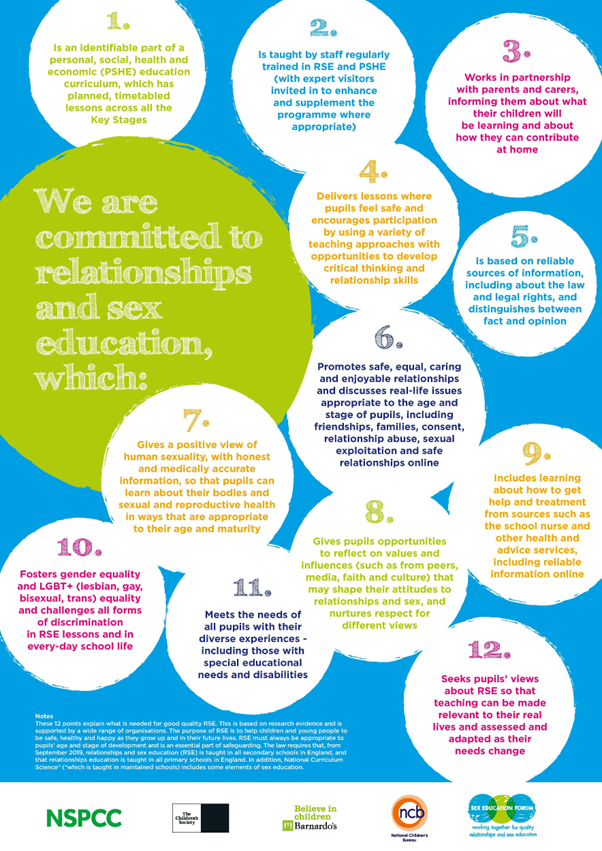
RSHE at Tanfield School provides balanced, factual information about human reproduction, together with consideration of the broader emotional, ethical, religious, and moral dimensions of sexual health. Aspects of the statutory curriculum are covered in PSHE, Science, ICT and P.E.
Our RSHE programme in PSHE aims to prepare all students for an adult life in which they can:
develop positive values and a moral framework that will guide their decisions, judgements and behaviour;
have the confidence and self-esteem to value themselves and others and respect for individual conscience and the skills to judge what kind of relationship they want;
understand the consequences of their actions and behave responsibly within sexual and non-sexual relationships;
avoid being exploited or exploiting others or being pressured into unwanted or unprotected sex including violence in teenage relationships;
understand the true meaning of consent;
communicate effectively by developing appropriate terminology/language for sex and relationship issues;
develop awareness of their evolving sexuality and understand human sexuality, gender identity and challenge sexism and prejudice, which is inclusive of all young people;
understand the arguments for delaying sexual activity;
understand the reasons for having protected sex;
have sufficient information and skills to protect themselves in a variety of situations including from exploitation, abuse and violence and uninvited/unwanted conceptions and sexually transmitted infections including HIV;
be aware of sources of help for all young people and acquire the skills and confidence to access confidential health advice, support and treatment if necessary;
know how the law applies to sexual relationships, enthusiastic consent, sexting/nudes and e-safety.
Please see Appendix 1.