Together we will STOP bullying
This section of the policy has been created in partnership with the Student leaders at Tanfield School
Together we will STOP bullying
This section of the policy has been created in partnership with the Student leaders at Tanfield School

At Tanfield School our definition of bullying is when someone physically or verbally hurts you…
Several
Times
On
Purpose
What is bullying?
Bullying is hurting someone more than once, on purpose, by using behaviour or words which are meant to frighten or hurt that person. Bullying can be:
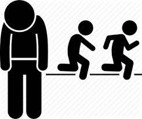




If you are being bullied in school, then you need to it to:
Start
Telling
Other
People
DO: | DON’T: | |
✔ Ask them to STOP if you can. ✔ Use eye contact and tell them to go away. ✔ Ignore them. ✔ Walk away. ✔ Talk to a peer supporter ✔ Get help ✔ TELL SOMEONE
| X Do what they say. X Get angry or look upset X Hit them. X Think it’s your fault. X Hide it.
| |
What should I do if I see someone else is being bullied?
Don’t walk away and ignore the bullying.
Ask the person to stop if it is safe to do so.
Don’t stay silent or the bullying will keep happening.
Who can I tell?
A friend
A peer supporter
A family member
Any adult at school
Use the online help button on your school login.
Any other Adult.
Everyone at Tanfield School will work together to:
Make our school a place where everyone can feel safe and happy.
Help everyone to get along with each other because we believe that everyone has the right to be who they are.
Always treat bullying seriously.
This policy outlines what Tanfield School will do to prevent and tackle any and all forms of bullying, harassment or discrimination.
The policy has been adopted with the involvement of the whole school community.
Tanfield School is committed to developing an anti-bullying culture where the bullying of adults, children or young people is not tolerated in any form.
This policy is based on DfE guidance “Preventing and Tackling Bullying” July 2017 and supporting documents. It also takes into account the DfE statutory guidance “Keeping Children Safe in Education” 2023. The school has read Child net’s “Cyberbullying: Understand, Prevent and Respond: Guidance for Schools” and Stonewall’s “The School Report: The experiences of lesbian, gay, bi and trans young people in Britain’s schools in 2017”.
Links with other policies and practices:
This policy links with several other school policies, practices and action plans including:
Behaviour policy (including Searching, screening and confiscation)
Complaint’s policy
Safeguarding & Child protection policy
GDPR/Confidentiality
Use of mobile phones and social media.
Staff Handbook
Links to legislation:
There are several pieces of legislation which set out measures and actions for schools in response to bullying, as well as criminal and civil law. These may include (but are not limited to):
The Education and Inspection Act 2006, 2011
The Equality Act 2010
The Children Act 1989
Protection from Harassment Act 1997
The Malicious Communications Act 1988
Public Order Act 1986
It is the responsibility of:
The Headteacher to communicate this policy to the school community, to ensure that disciplinary measures are applied fairly, consistently and reasonably, and that a member of the senior leadership team has been identified to take overall responsibility.
School Governors to take a lead role in monitoring and reviewing this policy.
All staff, including: governors, senior leadership, teaching and non-teaching staff, to support, uphold and implement this policy accordingly.
Parents/carers to support their children and work in partnership with the school.
Students to abide by the policy.
Tanfield School recognises that bullying, especially if left unaddressed, can have a devastating effect on individuals; it can create a barrier to learning and have serious consequences for mental wellbeing. We want our students to become responsible citizens and to prepare them for life in 21st Century Britain. By effectively preventing and tackling bullying in all of its forms, our school can help to create a safe, disciplined environment, where every pupil is included and able to learn and fulfil their potential.
Bullying hurts. No one deserves to suffer from bullying. Everybody has the right to be treated with respect. Students who are bullying others need to learn different ways of behaving. Whenever the opportunity arises, it must be made profoundly clear that bullying will not be tolerated at Tanfield School . We are committed to providing a caring, friendly and safe environment for all students so that they can grow and learn in a relaxed and safe setting. Tackling bullying is the responsibility of all members of the school community.
We tackle bullying as an issue because we are an effective, caring school and we believe that:
Bullying makes people unhappy and leads to low self-esteem.
Students who are being bullied are unlikely to concentrate fully on their schoolwork.
Some students avoid being bullied by not attending school.
Students who observe unchallenged bullying behaviour may copy this anti-social behaviour.
We wish to build the self-esteem of all students, especially bullies and victims.
Bullying is “behaviour by an individual or a group, repeated over time that intentionally hurts another individual either physically or emotionally”. (DfE “Preventing and Tackling Bullying”, July 2017)
Bullying can include: name calling, taunting, sexist remarks/innuendos, mocking, making offensive comments; kicking; hitting; taking belongings; producing offensive graffiti; gossiping; excluding people from groups and spreading hurtful and untruthful rumours.
This includes the same unacceptable behaviours expressed online, sometimes called online or cyberbullying. This can include: sending offensive, upsetting and inappropriate messages by phone, text, instant messenger, through gaming, websites, social media sites and apps, and sending offensive or degrading photos or videos.
Bullying can be a form of child on child abuse and can be emotionally abusive; it can cause severe and adverse effects on children’s emotional development.
It is important to understand that bullying is not an odd occasional falling out with friends, occasional name-calling, arguments, or when the occasional ‘joke’ is played on someone. Children do sometimes fall out or say things because they are upset. When occasional problems of this kind arise, it is not classed as bullying. It is an important part of a child’s development to learn how to deal with friendship breakdowns, the odd name calling or childish prank. We all have to learn how to deal with these situations and develop social skills to repair relationships. However, the school takes all incidents which undermine the safety and well-being of students seriously.
The behaviour of children, young people and adults is not easily understood. Changes in behaviour may have many causes. Being bullied can be one reason why behaviour changes and there is a need to be alert to the possibility that this may be the cases. Students who are being bullied may:
Become withdrawn, clingy, moody, aggressive and uncooperative;
Behave in immature ways;
Have sleep or appetite problems;
Have difficulty concentrating;
Show variation in academic performance;
Have cuts, bruises, aches, and pains without adequate explanation;
Request extra money or start stealing;
Have clothes or possessions that are frequently lost or damaged;
Complain of illness more frequently;
Show a marked change in a well-established pattern or behaviour e.g. sudden loss of interest in activities, changing times of coming and going from home, reluctance to leave home, a request to change school, a refusal to return to a place or activity, experimenting with drugs or alcohol.
Bullying can happen to anyone. This policy covers all types of bullying including:
Bullying of young carers, children in care or otherwise related to home circumstances
Bullying related to appearance or physical/mental health conditions
Bullying via technology, known as online or cyberbullying
Prejudicial bullying (against people/pupils with protected characteristics):
Bullying related to race, religion, gender, nationality or culture
Bullying related to SEND (Special Educational Needs or Disability)
Bullying related to sexual orientation (homophobic / biphobic bullying)
Sexist, sexual and transphobic bullying
Examples of racism that we need to be alert to include:
Verbal abuse by name-calling, racist jokes and offensive mimicry
Physical threats or attacks
Wearing of provocative badges or insignia
Bringing racist leaflets, comics or magazines into school
Inciting others to behave in a racist way
Racist graffiti or other written insults, even against food, music, dress or customs
Refusing to cooperate in work or in play.
Use of prejudicial language
Sexual bullying can have the following characteristics:
Sexual innuendos and propositions
Abusive name-calling
Sending texts, images, tagging people or inappropriate behaviour online or using mobile devices.
Looks and comments about appearance, attractiveness (e.g. emerging puberty)
Pornographic material, graffiti with sexual content
In its most extreme form, sexual assault or rape
We should be alert to sexual bullying based around sexual orientation, whether or not the person being bullied is openly gay, lesbian, bisexual, transgender, or perceived to be. Generally Homophobic bullying looks like other sorts of bullying, but in particular it can include:
Verbal abuse - including spreading rumours that someone is gay, suggesting that something or someone is inferior and so they are ‘gay’- e.g. ‘those trainers are so gay!’
Physical abuse – including hitting, punching, kicking, sexual assault, and threatening behaviour.
Cyberbullying – using on-line spaces to spread rumours about someone or exclude them. Can also include text messaging, including video and picture messaging.
The misuse of prejudice related language as a generic term of insult.
We should be alert to the fact that pupils with special educational needs or disabilities are often at greater risk of being bullied than other pupils on the basis of their educational difficulties or disability. In some cases, staff need to be extra vigilant due to their vulnerability.
A prejudice-based incident is an incident of unkind or hurtful behaviour that is motivated by a prejudice or negative attitude, beliefs or views towards a protected characteristic or minority group such as those listed above. It can be targeted towards an individual or group of people and have a significant impact on those targeted.
All prejudice-based incidents are taken seriously and recorded and monitored in school, with the Deputy Head Teacher regularly reporting incidents to the governing body. This not only ensures that all incidents are dealt with accordingly, but also helps to prevent bullying and ensure targeted anti-bullying interventions are established. Prejudice-based bullying includes:
Asylum seekers and refugees.
Body image.
Homophobia.
Transgender.
Looked After children.
Race and ethnicity.
Religion and belief.
Sectarianism.
Sex and gender.
Disabilities.
Young carers.
Social and economic prejudice.
Equality and diversity prejudice
Derogatory or offensive language is not acceptable and will not be tolerated. This type of language can take any of the forms of bullying listed in our definition of bullying. It will be challenged by staff and recorded and monitored via the school’s central recording system and follow up actions and sanctions, if appropriate, will be taken for pupils and staff found using any such language.
Racist, homophobic, biphobic, transphobic and disabilist language includes terms of abuse used towards people because of their race/ethnicity/nationality; because they are lesbian, gay, bisexual, or transsexual, or are perceived to be, or have a parent/carer or sibling who is; because they have a learning or physical disability. Such language is generally used to refer to something or someone as inferior. This may also be used to taunt young people who are different in some way or their friends, family members or their parents/carers. In the case of homophobic, biphobic and transphobic language particularly, dismissing it as banter is not helpful as even if these terms are not referring to a person’s sexual orientation or gender identity they are using the terms to mean inferior, bad, broken or wrong.
Tanfield School will challenge the use and misuse of prejudice related language even if it appears to be being used without any intent.
Persistent misuse of prejudice related language and/or bullying will be dealt with as with any other form of bullying.
It should be noted that abusive comments and interactions may not be passed off as mere ‘banter’. Such comments referring to a person’s race, religion, ethnicity, sexuality, culture, special educational needs or because a child is a carer are not acceptable and will be treated seriously, even if it is an isolated incident.
With constantly advancing technology we must be alert to this unpleasant and particularly intrusive form of bullying. Cyberbullying can involve Social Networking Sites, like Snapchat, Instagram, Facebook and Twitter, emails and mobile phones, used for SMS messages and as cameras.
Monitors and reviews our anti-bullying policy and practice on a regular basis.
Supports staff to promote positive relationships, to help prevent bullying.
Recognises that some members of our community may be more vulnerable to bullying and its impact than others; being aware of this will help us to develop effective strategies to prevent bullying from happening and provide appropriate support, if required.
Will intervene by identifying and tackling bullying behaviour appropriately and promptly.
Ensures our students are aware that bullying concerns will be dealt with sensitively and effectively; that everyone should feel safe to learn and abide by the anti-bullying policy.
Requires all members of the community to work with the school to uphold the anti-bullying policy.
Reports back to parents/carers regarding concerns on bullying, dealing promptly with complaints.
Seeks to learn from good anti-bullying practice elsewhere.
Utilises support from other relevant organisations when appropriate.
The following steps may be taken when dealing with all incidents of bullying reported to the school:
If bullying is suspected or reported, the incident will be dealt with immediately by the member of staff who has been approached or witnessed the concern.
The school will provide appropriate support for the person being bullied – making sure they are not at risk of immediate harm and will involve them in any decision-making, as appropriate.
A member of the pastoral team will interview all parties involved.
The designated safeguarding lead will be informed of all bullying issues where there are safeguarding concerns.
The school will inform other staff members, and parents/ carers, where appropriate.
Sanctions (as identified within the school behaviour policy) and support for individuals will be implemented, in consultation with all parties concerned.
If necessary, other agencies may be consulted or involved, such as: the police (if a criminal offence has been committed) or other local services including early help or children’s social care (if a child is felt to be at risk of significant harm).
Where the bullying takes place off school site or outside of normal school hours (including cyberbullying), the school will try to help provide support and investigate the incident. Appropriate action will be taken, including providing support and implementing sanctions in school in accordance with the school’s behaviour policy.
A clear and precise account of the incident will be recorded using CPOMS safeguarding recording system. This will include recording appropriate details regarding decisions and action taken.
When responding to cyberbullying concerns, the school will:
Act as soon as an incident has been reported or identified.
Provide appropriate support for the person who has been cyberbullied and work with the person who has carried out the bullying to ensure that it does not happen again.
Encourage the person being bullied to keep any evidence (screenshots) of the bullying activity to assist any investigation.
Take all available steps where possible to identify the person responsible. This may include:
looking at use of the school systems;
Identifying and interviewing possible witnesses;
Contacting the service provider and the police, if necessary.
Work with the individuals and online service providers to prevent the incident from spreading and assist in removing offensive or upsetting material from circulation. This may include:
Support reports to a service provider to remove content if those involved are unable to be identified or if those involved refuse to or are unable to delete content.
Confiscating and searching pupils’ electronic devices, such as mobile phones, in accordance with the law and the school searching and confiscation policy.
Requesting the deletion of locally-held content and content posted online if they contravene school behavioural policies.
Ensure that sanctions are applied to the person responsible for the cyberbullying; the school will take steps to change the attitude and behaviour of the bully, as well as ensuring access to any additional help that they may need.
Inform the police if a criminal offence has been committed.
Provide information to staff and students regarding steps they can take to protect themselves online. This may include:
advising those targeted not to retaliate or reply;
providing advice on blocking or removing people from contact lists;
helping those involved to think carefully about what private information they may have in the public domain.
Reassuring the student and providing continuous support.
Offering an immediate opportunity to discuss the experience with their teacher, the designated safeguarding lead, or a member of staff of their choice.
Being advised to keep a record of the bullying as evidence and discuss how to respond to concerns and build resilience as appropriate.
Working towards restoring self-esteem and confidence.
Providing ongoing support; this may include: working and speaking with staff, offering formal counselling, engaging with parents and carers.
Where necessary, working with the wider community and local/national organisations to provide further or specialist advice and guidance; this could include support through Early Help or Specialist Children’s Services, or support through Child and Adolescent Mental Health Services (CAMHS).
Being informed about the outcome of the investigation into their concerns.
Discussing what happened, establishing the concern and the need to change.
Informing parents/carers to help change the attitude and behaviour of the child.
Providing appropriate education and support regarding their behaviour or actions.
Attend a mediation (restorative justice) meeting with the affected student to resolve issues and prevent recurrence if appropriate and agreed by all parties.
If online, requesting that content be removed and reporting accounts/content to service provider.
Sanctioning, in line with school behaviour policy; this may include official warnings, detentions, removal of privileges (including online access when encountering cyberbullying concerns), internal exclusion/isolation, assisted off site provision, alternative provision, suspension or permanent exclusions.
Where necessary, working with the wider community and local/national organisations to provide further or specialist advice and guidance; this may include involvement from the Police or referrals to Early Help, Specialist Children’s Services, or Child and Adolescent Mental Health Services (CAMHS) as appropriate.
Tanfield School takes measures to prevent and tackle bullying among pupils; however, it is equally important to recognise that bullying of staff and parents, whether by pupils, parents or other staff members, is unacceptable.
Offering an immediate opportunity to discuss the concern with the designated safeguarding lead, a senior member of staff and/or the Head teacher.
Advising them to keep a record of the bullying as evidence and discuss how to respond to concerns and build resilience, as appropriate.
Where the bullying takes place off school site or outside of normal school hours (including cyberbullying), the school will try to help provide support and investigate the incident. Appropriate action will be taken, including providing support and implementing sanctions in school in accordance with the school’s behaviour policy.
Reporting offensive or upsetting content and/or accounts to the service provider, where the bullying has occurred online.
Reassuring and offering appropriate support. Working with the wider community and local/national organisations to provide further or specialist advice and guidance.
Discussing what happened with a senior member of staff and/or the Headteacher to establish the concern.
Establishing whether a legitimate grievance or concern has been raised and signposting to the school’s official complaints procedures.
If online, requesting that content be removed.
Instigating disciplinary, civil or legal action as appropriate or required.
Environment; The whole school community will:
Create and support an inclusive environment which promotes a culture of mutual respect, consideration and care for others, which will be upheld by all.
Recognise that bullying can be perpetrated or experienced by any member of the community, including adults and children (child on child abuse).
Openly discuss differences between people that could motivate bullying, such as: religion, ethnicity, disability, gender, sexuality or appearance related difference. Also, children with different family situations, such as looked after children or those with caring responsibilities.
Challenge practice and language which does not uphold the values of tolerance, non-discrimination and respect towards others.
Be encouraged to use technology, especially mobile phones and social media positively and responsibly.
Work with staff, the wider community and outside agencies to prevent and tackle concerns including all forms of prejudice-driven bullying.
Actively create “safe spaces” for vulnerable children and young people.
Celebrate success and achievements to promote and build a positive school ethos.
The whole school community will:
Provide a range of approaches for students, staff and parents/carers to access support and report concerns.
Regularly update and evaluate our practice to consider the developments of technology and provide up-to-date advice and education to all members of the community regarding positive online behaviour.
Take appropriate, proportionate and reasonable action, in line with existing school policies, for any bullying brought to the school’s attention, which involves or affects students, even when they are not on school premises; for example, when using school transport or online, etc.
Implement appropriate disciplinary sanctions; the consequences of bullying will reflect the seriousness of the incident, so that others see that bullying is unacceptable.
Use a variety of techniques to resolve the issues between those who bully, and those who have been bullied.
The school will raise the awareness of the anti-social nature of bullying through PHSE lesson, Morning and afternoon meetings, use of bite-size sessions and social media.
The school community will:
Train all staff using face to face sessions and online training, including: teaching staff, support staff (e.g., administration staff, lunchtime support staff and site support staff) and pastoral staff, to identify all forms of bullying and take appropriate action, following the school’s policy and procedures (including recording and reporting incidents).
Consider a range of opportunities and approaches for addressing bullying throughout the curriculum and other activities, such as: through displays, morning/afternoon meetings, peer support, the school council, etc.
Provide systematic opportunities to develop students’ social and emotional skills, including building their resilience and self-esteem.
We will:
Involve students in policy writing and decision making, to ensure that they understand the school’s approach and are clear about the part they must play to prevent bullying.
Regularly canvas children and young people’s views on the extent and nature of bullying.
Ensure that all students know how to express worries and anxieties about bullying.
Ensure that all students are aware of the range of sanctions which may be applied against those engaging in bullying.
Involve students in anti-bullying campaigns in schools and embedded messages in the wider school curriculum.
Publicise the details of internal support, as well as external helplines and websites.
Offer support to students who have been bullied and to those who are bullying to address the problems they have.
We will:
Take steps to involve parents and carers in developing policies and procedures, to ensure they are aware that the school does not tolerate any form of bullying.
Make sure that key information about bullying (including policies and named points of contact) is available to parents/carers in a variety of formats.
Ensure all parents/carers know who to contact if they are worried about bullying and where to access independent advice.
Work with all parents/carers and the local community to address issues beyond the school gates that give rise to bullying.
Ensure that parents work with the school to role model positive behaviour for pupils, both on and offline.
Ensure all parents/carers know about our complaints procedure and how to use it effectively, to raise concerns in an appropriate manner.
Why do we do this?
We have a responsibility to safeguard the wellbeing of ALL students.
To uphold the principles of equality as stated in Section Four of the ‘Equality Act 2010’ and ensure adequate protection of the following protected characteristics:
age;
disability;
gender reassignment;
marriage and civil partnership;
pregnancy and maternity;
race;
religion or belief;
sex;
sexual orientation.
We want our students to become responsible and tolerant citizens and to prepare them for life in 21st Century Britain.
Developing their understanding of fundamental British values
Create a safe, disciplined environment, where every pupil is included and able to learn and fulfil their potential.
Challenge the misuse of sexist, homophobic, biphobic, and transphobic (HBT) language in school.
Success Criteria
All staff feel confident when tackling, reporting, and logging HBT language and bullying when they encounter it.
All reported incidences of HBT bullying and prejudicial language are tracked and logged consistently regardless of who they are reported to.
All students feel safe within school and are confident as to how and to report incidences of HBT bullying and prejudice within school.
What is Prejudicial Language and HBT bullying?
Prejudicial Language:
Racist, sexist, homophobic, bi-phobic, transphobic (HBT) and disablist language includes terms of abuse used towards people because of their race/ethnicity/nationality; because they are lesbian, gay, bisexual, or transsexual, or are perceived to be, or have a parent/carer or sibling who is; because they have a learning or physical disability. Such language is generally used to refer to something or someone as inferior. This may also be used to taunt young people who are different in some way or their friends, family members or their parents/carers. In the case of homophobic, biphobic and transphobic language particularly, dismissing it as banter is not helpful as even if these terms are not referring to a person’s sexual orientation or gender identity, they are using the terms to mean inferior, bad, broken or wrong.
HBT bullying:
Persistent bullying of any nature aimed at lesbian, gay, bisexual and transgender young people or those perceived to be as a result of their real or perceived gender or sexual identity.
The persistent bullying of any student on the grounds of prejudice should be dealt with as per guidance in this policy.
All staff:
All staff have a responsibility to report any incidents of HBT language when they encounter it even if they do not believe it to have been intended with malice or prejudicial intent.
Should staff encounter HBT language around school or in the classroom, they should aim to have the student removed by contacting on-call staff. As when dealing with any other misdemeanour, it is important that students are not put on a stage or given opportunity to further express potentially harmful opinions, prejudicial attitudes, or further insight into hate from others. Explain to the student that derogatory language will not be tolerated at Tanfield School and that such attitudes do not represent our core values of hard work, trust and fairness.
The class teacher should then proceed to log what was said on Arbor using the “Prejudicial Language” button. Remember, this is visible to parents so ensure accuracy when quoting what was said.
A detention should then be issued for that night.
Micro Script:
During detention, it is important that we challenge and correct any misunderstandings or preconceptions that students might have on a one-to- one basis. Use the following micro script when dealing with students’ misunderstandings/ misconceptions.
1 | Question what the pupil said. “What do you mean by that?” or “Do you know what that word means?” |
2 | Explain what the word/s they said mean. Explain what LGBT means in an age appropriate way. |
3 | Link to school values. “Our school values are Hard work, Trust, and Fairness.” |
4 | Put it into a personal context. “How do you think it might feel if you had a friend or family member who was LGBT?” |
Year Managers:
Whilst it is important to acknowledge that not all incidences of prejudicial language and HBT language misuse is representative of HBT bullying, Year managers should track and record any incidences recorded through class charts. whilst students may cite a lack of understanding in the first instance, persistent and repeated misuse of HBT language despite the above measures will not be tolerated and will receive the same sanctioning as HBT bullying (see above) which will result in a more severe sanction.
Putting policy into practice
SEND
Cyberbullying
LGBTQ+
Sexual harassment and sexual bullying